

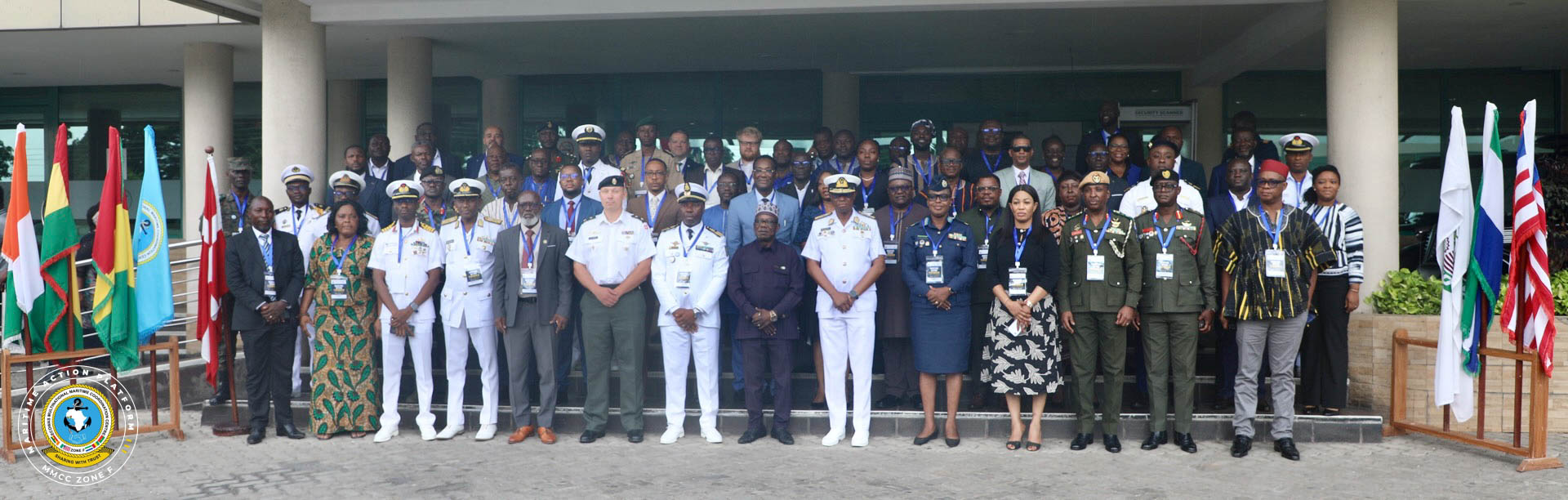
Accra is playing host to key maritime stakeholders from across West and Central Africa as the 2026 Maritime Action Platform Seminar opens, aimed at deepening cooperation on safety and security within the Gulf of Guinea.
The two-day seminar, taking place from 6 to 7 May, is being organised by the Zone F Multinational Maritime Coordination Centre (CMMC) in collaboration with the Centre for Stabilisation (CFS) at the Royal Danish Defence College (RDDC).
It marks the third in a series of engagements that began in 2024.
The high-level meeting has drawn participants from major regional bodies including the Gulf of Guinea Commission, the Economic Community of Central African States (ECCAS), and the Economic Community of West African States (ECOWAS).
The ECOWAS delegation is being led by Ambassador Abdel-Fatau Musah, Commissioner for Political Affairs, Peace and Security.
Representatives attending the seminar span a wide spectrum of the maritime sector, with particular focus on Zone F member states — Ghana, Côte d’Ivoire, Liberia, Sierra Leone, and Guinea.
The gathering is designed to promote dialogue and enhance shared understanding of maritime safety and security challenges facing the region.
It also seeks to strengthen collaboration among national, regional and international actors, including non-regional naval forces, as well as stakeholders in the shipping and fishing industries.
The Gulf of Guinea remains a strategic maritime corridor but continues to grapple with threats such as piracy, illegal fishing, trafficking, and other transnational crimes.
Against this backdrop, the seminar is expected to provide a platform for stakeholders to exchange ideas, assess ongoing efforts, and explore practical measures to improve coordination and response mechanisms.
The continued series of seminars underscores growing recognition of the need for sustained, collective action to safeguard the region’s maritime domain and protect economic activities tied to the sea.
The outcomes of the Accra meeting are expected to inform future policy direction and operational collaboration among participating countries and institutions.